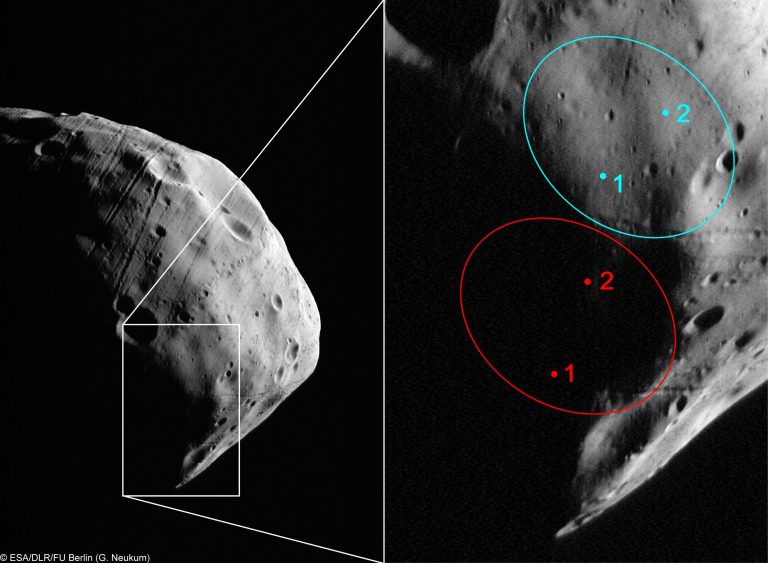

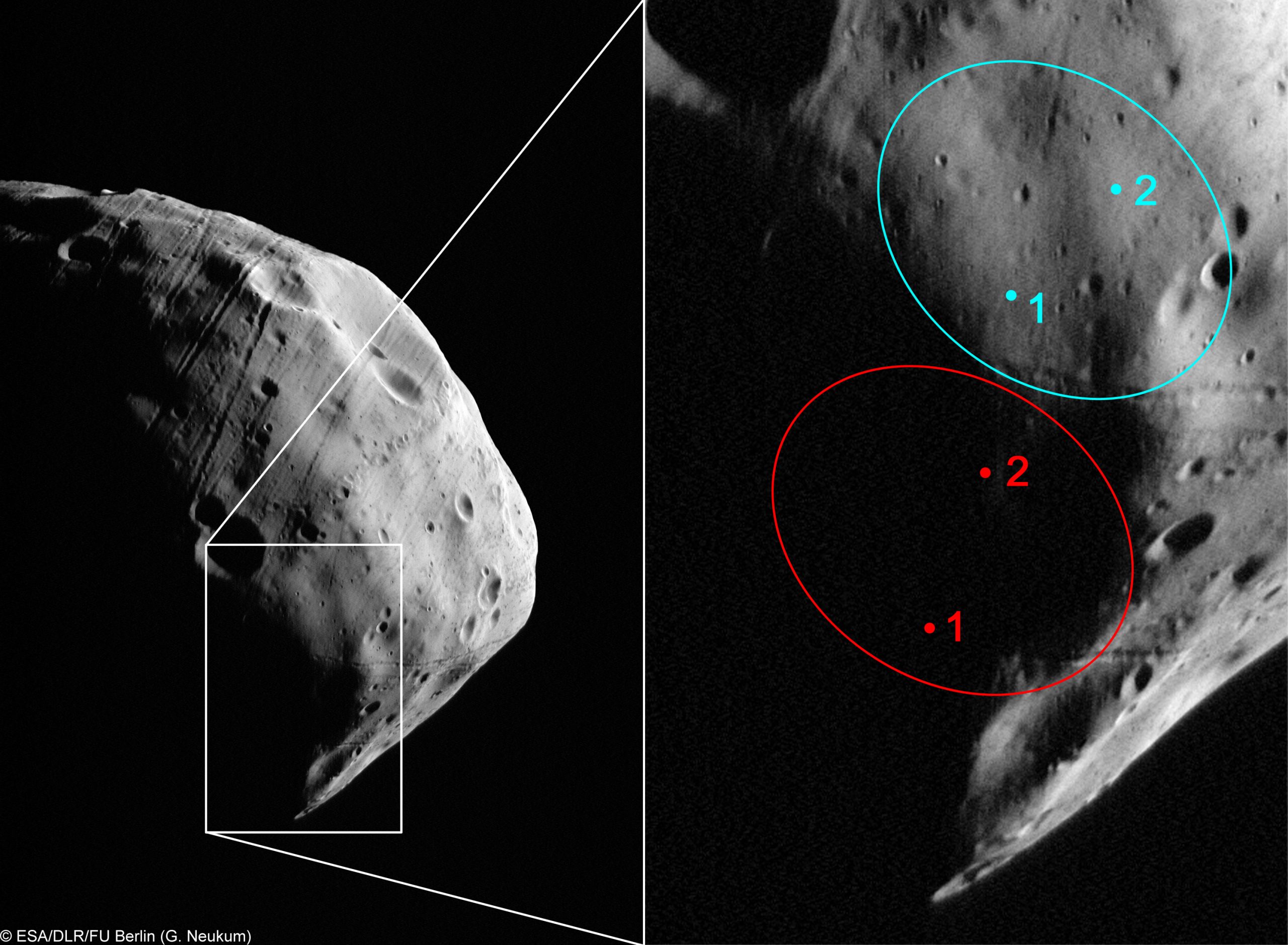
Mars moon Phobos soil is the target of Japan’s upcoming MMX mission, scheduled for launch on October 19. This groundbreaking project aims to collect the first samples from the Martian moon, offering insights into its composition and history.
Overview of the MMX Mission
The Japan Aerospace Exploration Agency (JAXA) is gearing up for its ambitious Martian moon exploration mission, known as the Martian Moons eXploration (MMX) mission. Scheduled for launch on October 19, 2023, the MMX project aims to collect the first samples of soil from Mars’ moon, Phobos. This mission represents a significant leap in our understanding of the Martian system and the origins of its moons.
The MMX spacecraft will embark on a journey that involves a series of complex maneuvers to reach Phobos, where it will carefully collect surface soil samples. The mission’s primary objectives include:
- Sample Collection: Extracting soil from the surface of Phobos to analyze its composition.
- Return to Earth: Bringing back the collected samples for detailed examination in laboratories.
- Scientific Research: Investigating the relationship between Phobos and Mars and what it reveals about the history of the solar system.
By studying the soil from Phobos, scientists hope to gather valuable insights into the moon’s formation and the evolutionary processes of celestial bodies. The MMX mission is not only a testament to Japan’s growing capabilities in space exploration but also a stepping stone for future missions aimed at deeper exploration of Mars and its moons.
Significance of Soil Collection
The upcoming MMX mission by Japan is set to mark a significant milestone in planetary science by collecting soil from Mars’ moon, Phobos. The significance of soil collection from Phobos extends beyond mere curiosity; it holds the potential to provide invaluable insights into the history of Mars and its moons.
Phobos is believed to be a captured asteroid, and its surface may contain materials that have remained unchanged since the early solar system. By analyzing the soil from Phobos, scientists can:
- Understand the formation of the Martian system: The soil may reveal clues about the processes that shaped Mars and its moons, contributing to our understanding of planetary evolution.
- Investigate organic compounds: The presence of organic materials in the soil could suggest the building blocks of life, paving the way for future astrobiological studies.
- Inform future missions: Understanding the soil composition will aid in planning for potential human exploration and resource utilization on Mars and its moons.
Additionally, the samples returned from Phobos can serve as a comparison point for lunar soil and Martian regolith, enriching the broader field of planetary geology. The findings from this mission could ultimately reshape our understanding of not just Mars, but also the wider solar system.
What to Expect from Phobos
The upcoming MMX mission, launched by Japan, aims to provide unprecedented insights into the Mars moon Phobos soil. Scientists anticipate that the analysis of this soil will unlock many secrets about the moon’s formation and its relationship with Mars.
As the spacecraft approaches Phobos, it is expected to conduct a series of detailed observations. This will include:
- Surface Mapping: High-resolution imaging will create detailed maps of Phobos’ surface, allowing researchers to identify the most promising soil collection sites.
- Composition Analysis: Instruments onboard will assess the chemical and mineralogical composition of the soil before any samples are collected.
- Environment Monitoring: The mission will measure the radiation and dust environment of Phobos, providing context for the soil samples.
The collection of soil from Phobos will utilize a unique sampling mechanism designed to gather material without causing significant disturbance. Once the samples are secured, they will be stored in a capsule and returned to Earth, where scientists will analyze them for organic compounds and other materials that might reveal the moon’s history.
Overall, the MMX mission represents a significant step in lunar exploration and promises to deepen our understanding of Phobos and its role in the Martian system.
Future of Mars Exploration
The future of Mars exploration is poised for a significant leap forward with Japan’s MMX mission, which aims to collect soil from Mars moon Phobos. As scientists continue to gather knowledge about Mars and its moons, the insights gained from Phobos soil could reshape our understanding of the Martian system.
Future missions to Mars will likely build on the data collected by MMX, paving the way for both robotic and human exploration. The analysis of Phobos soil could provide clues about the history of Mars, including its geological evolution and the potential for past life. By studying the composition of Phobos, researchers hope to understand better the processes that led to the formation of Mars and its moons.
Moreover, the findings from Phobos might also have implications for future colonization efforts. Understanding the materials available on Phobos could aid in developing in-situ resource utilization strategies, which are essential for sustaining human life during long-term missions on Mars.
As international space agencies collaborate and share knowledge, the exploration of Mars and its moons will become increasingly interconnected. The data collected from Phobos soil will be instrumental in guiding the next generation of missions, enhancing our quest to unlock the secrets of the Red Planet and its fascinating natural satellites.
Technology Behind the Mission
The technology behind Japan’s MMX (Martian Moons eXploration) mission is a marvel of modern engineering, designed to collect and analyze soil from Mars’ moon Phobos. This ambitious mission employs a sophisticated array of instruments to ensure the successful retrieval and study of Phobos soil.
One of the key components of the MMX mission is the Sample Collection System, which includes a robotic arm equipped with a drill and a scoop. This system is engineered to gather soil and regolith from Phobos’ surface, providing scientists with invaluable samples that may reveal insights into the moon’s composition and its history.
Additionally, the spacecraft is outfitted with advanced scientific instruments such as:
- Imaging Systems: High-resolution cameras will capture detailed images of Phobos, aiding in navigation and site selection for sampling.
- Spectrometers: These devices will analyze the composition of the collected soil, helping researchers understand its mineralogy.
- Environmental Sensors: To monitor conditions on Phobos, ensuring safe operations during the mission.
Another notable feature is the Return Capsule, which will securely store the collected soil and transport it back to Earth for comprehensive analysis. The combination of these technologies positions the MMX mission as a pivotal step in our understanding of Mars’ moons and their potential role in future explorations.
The analysis of Mars moon Phobos soil will provide invaluable insights into the formation of the Martian system. Scientists are eager to understand the composition and history embedded within the Mars moon Phobos soil collected by the MMX mission.
By ESA/DLR/FU Berlin (G. Neukum), CC BY-SA 3.0 IGO via Openverse
Where this came from
Related stories
Nuri Rocket launch: The Best Proven Success for South Korea · Fitbit Edge specs reveal best features and designs · Open-source AI models: The Best Proven Path to Innovation
About the Author